The Story of
Sri Lankan Specialty Coffee
From Seed to Sprout
Every great coffee story starts in a coffee nursery, where young plants are cultivated with care. Nurseries are specialised facilities that grow healthy, disease-free, high-quality saplings (young plants) under controlled conditions. Nurseries also shelter the saplings from the vagaries of a changing climate.
Nurseries are vital to increasing coffee cultivation in Sri Lanka, as they can provide smallholder coffee farmers and large-scale plantation companies ready-to-plant saplings. Coffee saplings take 2-3 years to reach maturity and start yielding cherries. Having easy access to high-quality plants.
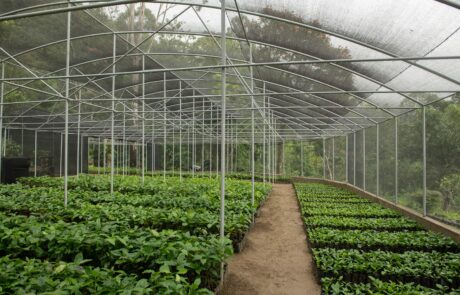
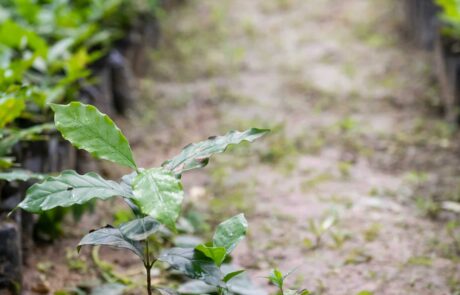
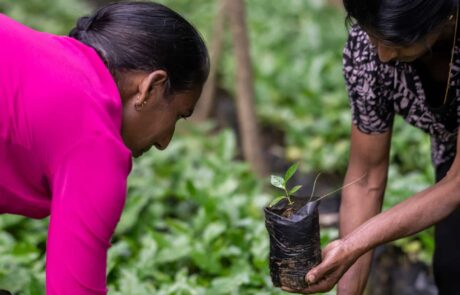
ABA Nursery, Uvaparanagama, and Helanta Coffee, Kotmale.
From Leaf to Legacy
In specialty coffee, quality starts long before the first sip—it begins with a single, carefully nurtured sapling. Regular checks on the health of coffee saplings are essential to ensure they grow into strong, productive plants.
Coffee leaf rust (CLR), a fungal disease that can devastate entire crops if left unchecked, is a major threat. CLR had a devastating impact on Sri Lanka’s coffee industry in the 19th century and was a major reason the country transitioned from coffee to tea cultivation. Over the years, farmers have learned to spot the early signs of CLR, like yellow-orange spots on the underside of leaves.
As seen in these images, hands-on nursery management and active knowledge sharing between growers ensure only the healthiest plants make it to the next stage.


ABA Nursery, Uvaparanagama
Seeds of Opportunity
In Sri Lanka’s misty Central Highlands, ground elevation, rainfall and soil conditions combine to give coffee its ideal home. These regions offer the optimal climate conditions for cultivating the high-quality Arabica coffee variety. Coffee plant distribution initiatives play a vital role in ensuring that smallholder farmers receive high-quality, disease-resistant saplings. This enables growers to scale up production and increase their yield and income.
Plant distributions are often organised as communal events, where farmers, coffee processors and their extension workers (field officers who work with the farmers), nursery operators, and government representatives gather to share knowledge and resources. Bringing the community together, this sense of unity extends beyond the fields. As coffee becomes a shared success story, growing villages are connected to new business opportunities in a thriving economic sector.


Helanta Coffee, Kotmale.
Nurturing Knowledge and Empowering Farmers
Behind every exceptional cup of coffee is a well-informed farmer. These images show coffee farmer training conducted by coffee processor Helanta Coffee, focusing on improving farming practices. Australia’s Market Development Facility (MDF) supports its business partners to conduct the training, to increase critical knowledge on topics ranging from plant management to harvesting.
Close to half of Sri Lanka’s smallholder coffee farmers are women; the training is an opportunity for women to improve their growing practices, reduce the labour required on farming and strengthen their role in household decision-making. Whether managing nurseries, sorting cherries, or leading small farms, trained women are shaping the future of Sri Lankan coffee.


Helanta Coffee, Kotmale.
The Red Cherry Sourcing Model
In the past, farmers harvested both unripe and ripe coffee cherries and processed them at home (into a green bean). They would then sell these green beans to processors, earning flat prices as quality control was minimal.
When a coffee cherry turns a deep, vibrant red, it’s perfectly ripe and ready for harvest. In a pivotal shift in farm and market practices, MDF worked with coffee businesses to begin encouraging farmers to pick and sell red cherries. The incentive was price—higher prices for a high-quality red cherry. Skipping the processing step also meant farmers saved time. This was particularly a gamechanger for women.
This simple change transformed the way farmers harvest, boosting both their income and the quality of coffee that was being sold from farms.

UpCountry Brothers, Keppitipola; Helanta Coffee, Kotmale; and Ella Coffee Collective (AMBA Estate), Ella.
Coffee in Motion: From Farmer to Processor
Transporting freshly harvested coffee cherries from farmers to processors is a critical step in preserving coffee quality. One of the most effective methods adopted today is the farmgate red cherry collection model, where processors collect ripe cherries directly from farmers’ doorsteps. This model is particularly beneficial for smallholder farmers in remote or highland areas, as it saves time and effort, and eliminates the need to travel long distances to the market. In some regions, local collection points are also set up to collect cherries from multiple farmers for bulk transport.
This approach also reduces post-harvest losses and ensures cherries are processed while fresh—preserving the flavor profile essential to high-quality specialty coffee.
For many women farmers, this system lightens their workload and provides quicker access to income. The images show coffee cherries collected by the processor being brought to a processing centre. Efficient transportation is a crucial part of ensuring Sri Lankan coffee meets international standards and continues its resurgence on the global stage.


Elpitiya Plantations, Meakumbura and a Helanta Coffee farmer.
Grounds for Growth: Home Gardens and Plantations
In Sri Lanka, coffee is grown on two different spectrums. One is in the backyards of smallholder farming families, where coffee trees are nestled among other crops such as spices. These home gardens, often managed by the women of household, are deeply rooted in tradition and community. With the right support and guidance, they can produce exceptional specialty coffee.
At the other end of the production spectrum, medium- and large-scale plantation companies are beginning to diversify into coffee. With access to improved farming techniques, skilled labour and established processing facilities, plantations have the potential to deliver high volumes of consistent, high-quality coffee for local and global markets.
Both models are vital to Sri Lanka’s coffee resurgence. Together, they represent the blend of tradition and innovation that is shaping the future of Sri Lankan coffee.

Conservation Links, Kotmale
The Scales of Quality
Before the coffee cherries are processed, they must be weighed. Accurate weighing of freshly harvested red coffee cherries ensures farmers are paid fairly for the exact quantity they deliver, building trust and transparency across the supply chain. For processors, it is a way to track yield, plan processing volumes and monitor post-harvest efficiency. This simple, routine act plays a powerful role in driving accountability.
As seen in the image, the cherries are weighed in sacks or in the plucking baskets that farmers use.
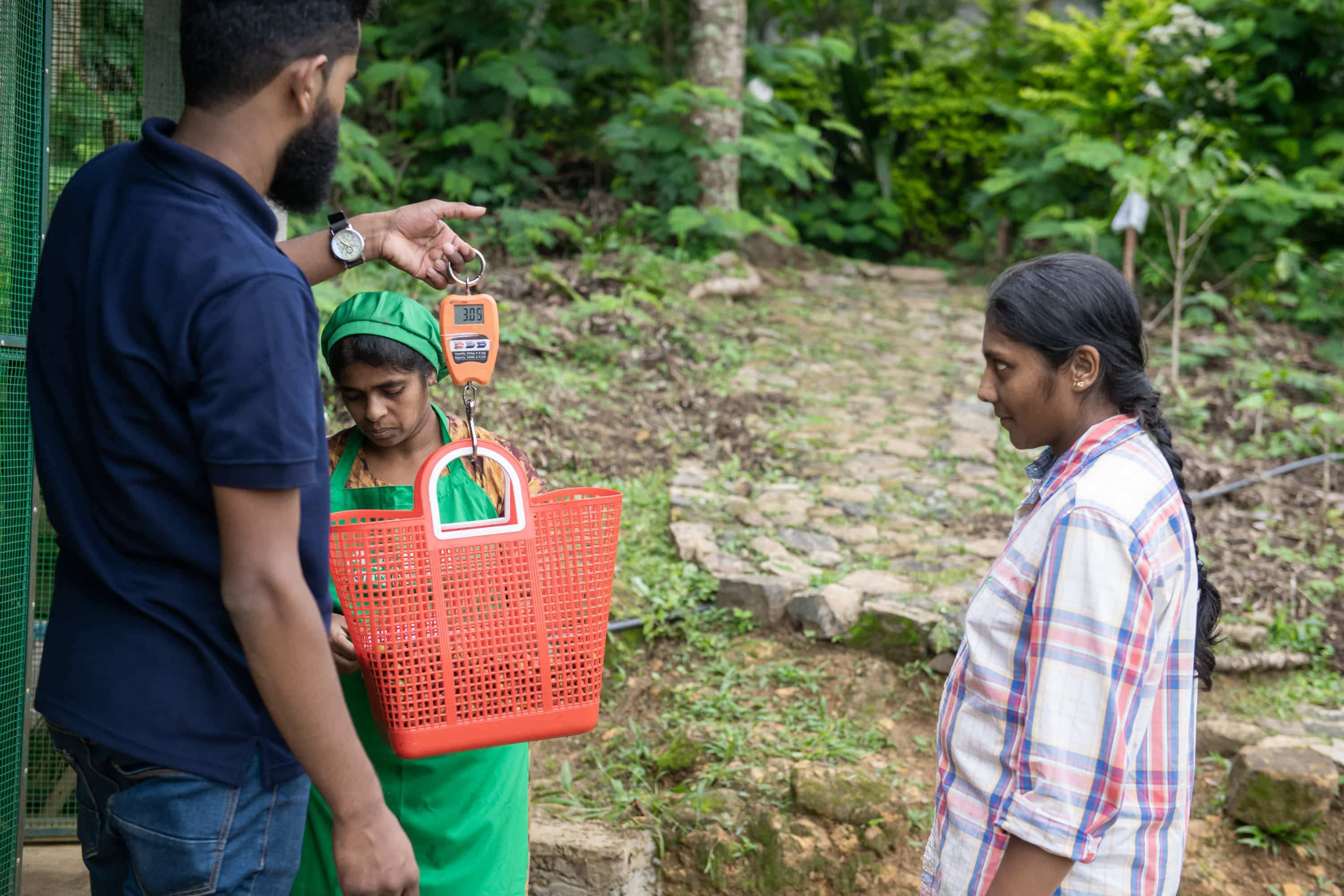

Ella Coffee Collective and Conservation Links, Kotmale.
Cherries Enter The Wetmill
Before coffee cherries become a flavourful brew, they pass through a ‘wet mill,’ where the cherries undergo a vital quality check using water, a simple yet powerful method. This natural sorting technique allows processors to immediately separate low-quality cherries that could affect the taste and value of the final product. Once submerged, the ripe and dense cherries sink, while the underdeveloped or damaged ones float.
Sorting the red cherries is the next critical step: a hands-on process where trained employees, most often sorting women, carefully inspect the cherries to ensure only the highest quality cherries make it through. Despite the wet-mill processing, cherries with defects such as discolouration, insect damage or breakages can still slip through. Manual sorting according to the colours of the cherries (red, green and yellow) helps to decide between the ripe and unripe cherries, guaranteeing a consistent flavour profile and visual appeal. This step is especially important in specialty coffee, where in the red cherries even small imperfections can impact taste and market value. By removing the outliers, red cherry sorting ensures that what’s left behind is nothing short of excellence.
Investing with business partners to set up centralised wet mills has been an important part of MDF’s work in the sector, as reflected in the images.


UpCountry Brothers, Keppetipola, and Helanta Coffee, Kotmale.
Peeling Back the Layers: The Pulping and Fermentation Process
Once harvested and sorted, the ripe red coffee cherries go through a pulping machine, which separates the bean from its outer skin. This process is important because it removes the fruity outer layer, allowing the bean to begin its transformation into high-quality coffee. Efficient pulping reduces the risk of fermentation defects and lays the foundation for clean, flavour-rich coffee.
Traditionally, pulping machines were rarely used by farmers, who used more natural processing techniques—i.e. drying the cherry along with its outer skin. Today, with the adoption of washed processing techniques, we see pulping machines used in most processing centres. These motorised units can handle larger volumes quickly and with greater precision, ensuring a more uniform product and reducing the labour required. By improving both efficiency and quality, machine pulping plays a vital role in scaling up Sri Lanka’s specialty coffee production.
After pulping, to unlock flavour from within, the coffee beans go through fermentation. Beans are placed in clean fermentation tanks, usually for 24-72 hours, where naturally occurring microbes gently remove the sticky layer of mucilage without damaging the bean. This step is critical for developing the unique flavour profiles of specialty coffee and brings out the coffee’s natural sweetness, clarity and complexity. For Sri Lanka’s highland-grown coffee, precise fermentation is key to achieving the vibrant, high-quality cup the industry is gaining recognition for.


UpCountry Brothers, Keppitipola, and Conservation Links, Kotmale.
Sustainable Shifts in Coffee Drying
In the journey from cherry to cup, drying is the stage that preserves both quality and character, by reducing the moisture content. Traditionally, beans are spread out under the sun on raised beds outdoors and turned regularly. While sun drying is cost-effective, it’s highly dependent on weather and increases the risk of spoilage caused by irregular climate patterns like unexpected rains, humidity, or contamination from dust and pests.
To address this challenge, in 2021 MDF introduced climate-resistant drying houses to local processors for the first time in Sri Lanka. These are specially designed, covered structures that allow for controlled, consistent drying regardless of weather. These houses protect the beans from the elements while maintaining optimal airflow and temperature. This leads to a more uniform drying process, reducing post-harvest losses and improving bean quality. With the use of moisture meters, processors are able to measure the moisture content of the beans while drying. Drying houses help processors adapt to unpredictable climate conditions while preserving the delicate flavours of specialty coffee.


UpCountry Brothers, Keppitipola, and Helanta Coffee, Kotmale.
The Art of Green Bean Sorting
Once the coffee beans are dried, the outer parchment layer is removed through a hulling machine. They are now raw and green—the greenbean stage of coffee. The greenbeans are sorted by hand, with great care taken to remove defective beans that are chipped, insect-damaged, blackened or otherwise flawed.
Processors are now using specialised sorting machines, where beans are graded based on size, weight and density, as these factors influence how evenly they roast. High-quality specialty coffee demands a high level of consistency, and even a small number of defective beans can alter flavour profiles. This step ensures that only the best beans move forward to the next phase of roasting.
In many Sri Lankan processing centres, women trained to identify the slightest imperfections lead the sorting process. For the women, work in the processing centre offers flexible employment and income opportunities that support household incomes and empower them to become vital contributors to the sector.


Where Flavour Begins: Roasting a Revolution in Sri Lankan Coffee
Roasting is where the true character of coffee comes to life. In this transformative stage, green beans are carefully heated to unlock their unique aromas, flavours and textures. Temperature, time and technique all play crucial roles, as roasting too lightly may result in underdeveloped flavours, while going too dark can mask the beans’ natural qualities.
More local roasters are now emerging in Sri Lanka, experimenting with roast profiles to highlight regional nuances—from fruity floral notes in the central hills to chocolatey depths from higher altitudes. Many roasters use roasters to maintain consistency, offering quality beans to cafes, retailers and international buyers.
Roasting isn’t just a technical process—it’s an art form that bridges the farmer’s hard work with the final sip in your cup.

Helanta Coffee Roasting Centre, Kandy.
Brewing the Perfect Cup
Brewing is the final step in the journey from bean to cup. In Sri Lanka’s growing specialty coffee scene, using different brewing techniques such as the V60 method (shown in the image) is gaining traction, as cafés and baristas seek to showcase the delicate aromas and complex flavour profiles of locally roasted beans. Brewing coffee isn’t just about making coffee — it’s about crafting an experience that honours the journey of every cherry picked, processed and roasted to perfection.


Helanta Coffee, Kotmale.
Brewing a Stronger Future
As Sri Lanka’s specialty coffee sector gains momentum, MDF has played a catalytic role across the value chain—working closely with coffee companies, processors, plantations, and nurseries to drive quality, collaboration, and innovation.
In 2021, MDF was instrumental in establishing the Lanka Coffee Association (LCA)—Sri Lanka’s pioneering industry body for specialty coffee. Since then, MDF and LCA have co-hosted the Sri Lanka Coffee Festival for three consecutive years, creating a national platform for industry dialogue, knowledge sharing, and celebration. In 2023, the festival introduced the LCA Barista Championship
Recognising the challenges posed by climate change, in 2024 MDF also partnered with an Australian climate scientist to develop Sri Lanka’s first-ever study on the impact of climate change on the coffee industry. The findings were shared with key stakeholders and sparked important conversations on adaptation and resilience strategies for the future.
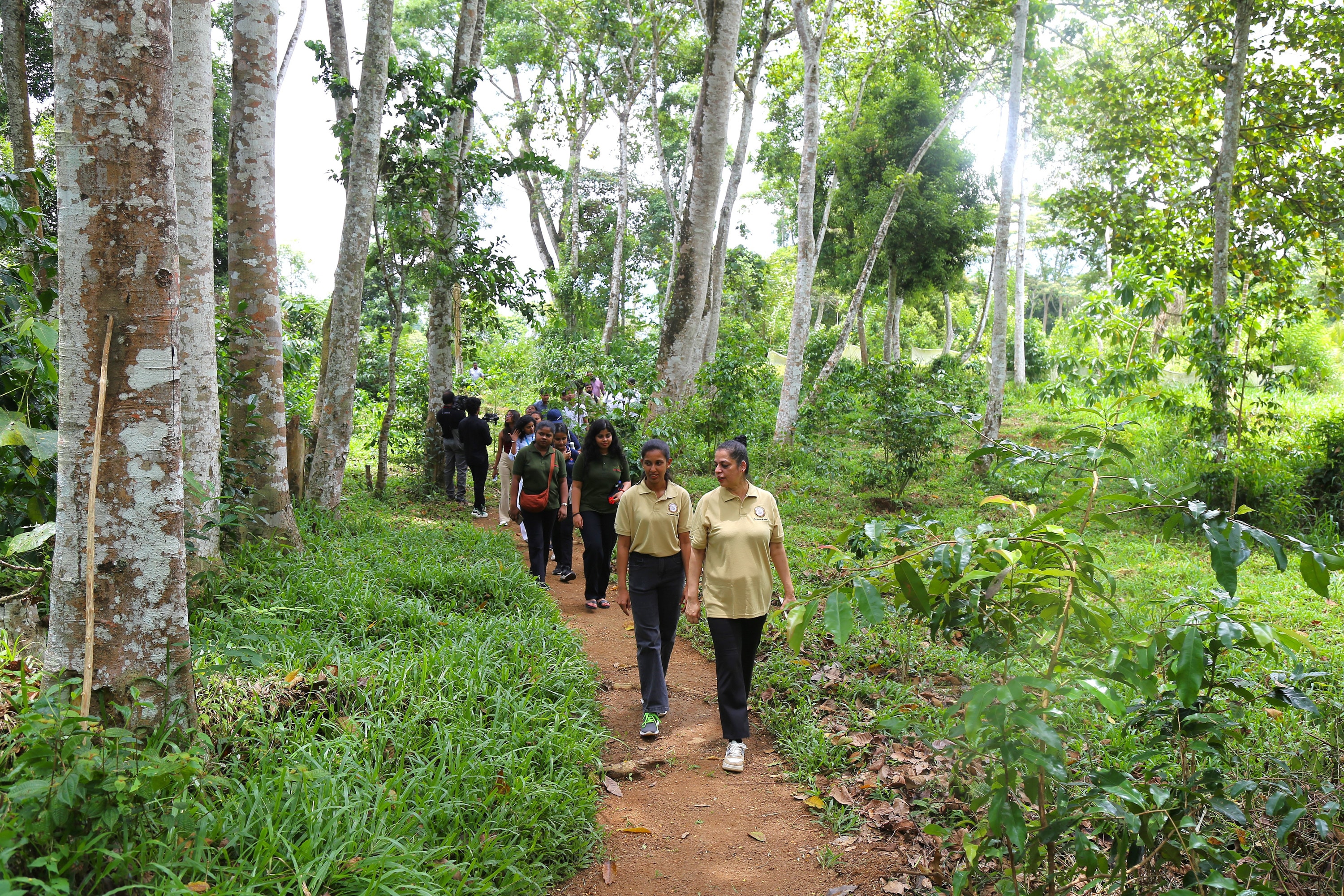
In April 2025, MDF unveiled the country’s first-ever Coffee Heritage Trail, in partnership with Tree of Life Nature Resort. Nestled in the tourism hotspot of Kandy, this immersive new experience bridges agriculture and tourism, offering visitors a unique window into Sri Lanka’s rich coffee legacy.