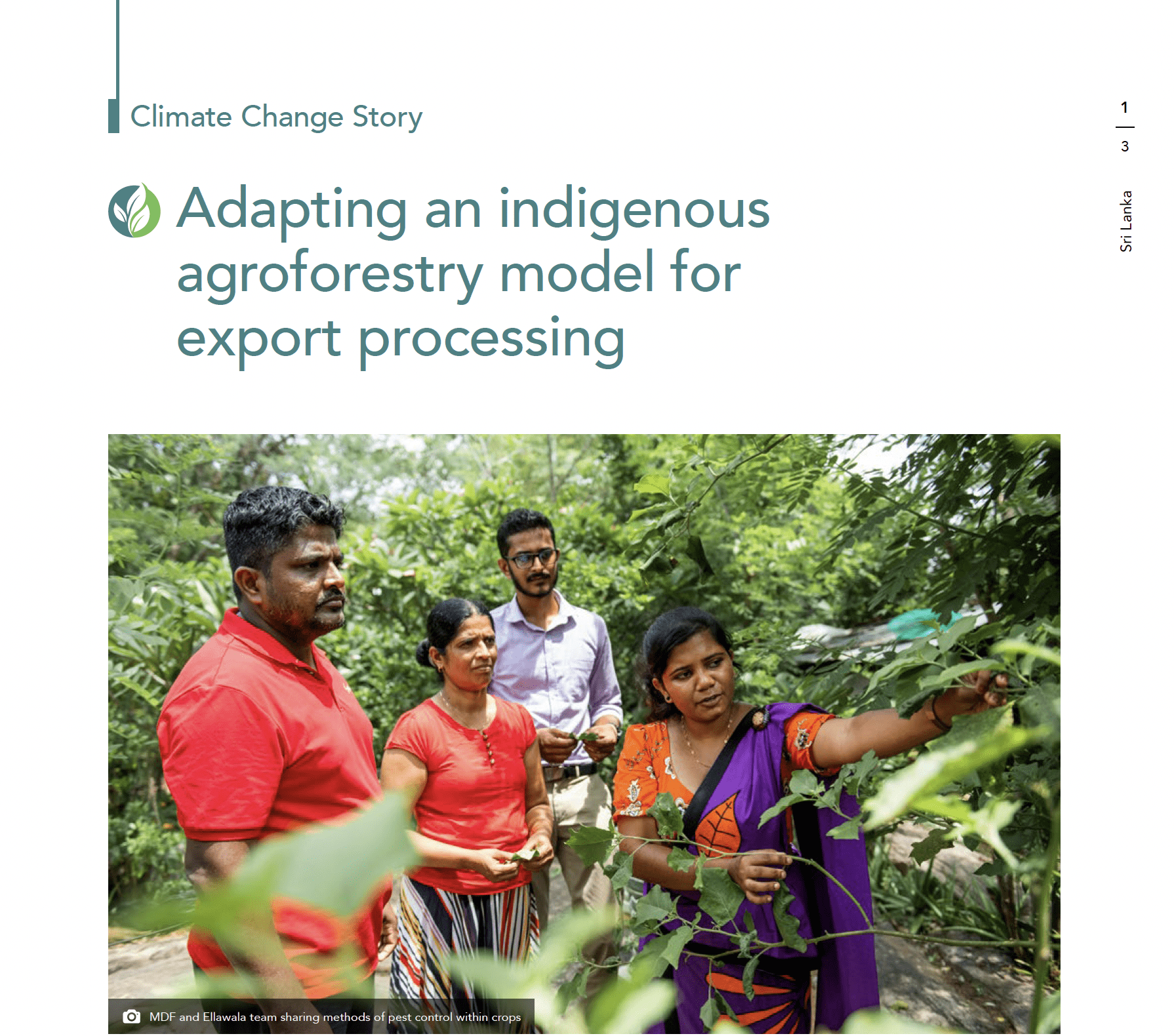
Climate Change Story – Adapting an indigenous agroforestry model for export processing
Sri Lanka’s dry zone plays a critical role in food security and export agriculture, as it contains some of the country’s most fertile land and is home to the bulk of the nation’s farming communities. However, the emerging challenge of shifting climate patterns – in the form of less water, changing rainfall and rising temperatures – pose an existential threat to farming and livelihoods.
Smallholders collectively own the most land and contribute to a significant share of production in key value chains in Sri Lanka. In the dry zone, limited availability of arable land requires agribusinesses to look beyond large commercial farms and work with smallholders to if they are to expand. Working with smallholders in the dry zone comes with the additional challenge of harsh climatic conditions. In this context, agribusinesses must look beyond traditional transactional models of farmer engagement.