
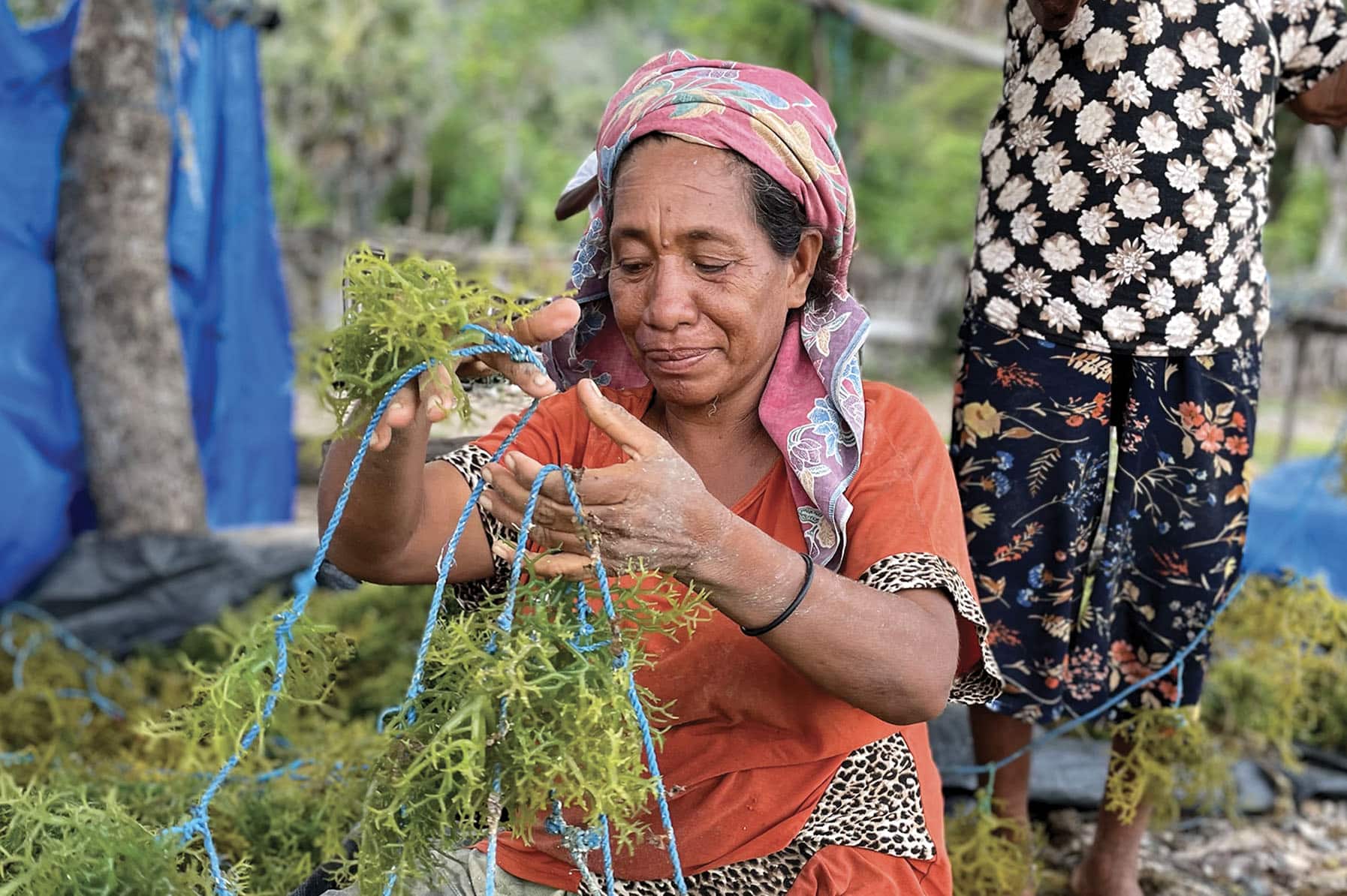
Atauro’s ocean farmers
On Timor-Leste’s Atauro Island, seaweed—a source of carbon capture that protects marine ecosystems—is being increasingly affected by shifting climate patterns. Atauro has a population of 10,302 inhabitants who rely on an ocean-based economy for survival. Income generation opportunities are limited on the island, and over 1,200 ocean farmers engage in seaweed farming. The activity supports the island’s communities to generate export income and is a more lucrative option than moving to the capital, Dili, on the mainland.
Seaweed does not require fertiliser or feed. Instead, it uses simple ropes with seedlings attached to them, submerged in the clear, shallow waters of Atauro, and harvested every 40 days. The farmers then clean, sundry and sell the harvest to MDF partner Cottonii, one of Timor-Leste’s few seaweed exporters.
However, the farmers’ drying and processing practices need to improve to meet the high international standards of the large factories that Cottonii plans to sell to in the future. With MDF support, Cottonii has trained its farmers to address these gaps. MDF’s intervention engaged technical expertise from Indonesia to support Atauro’s farmers and connect them with new buyers. Apart from these changes, Cottonii has another challenge to address—one more tenacious than changing the behaviour of their farmers: climate change.