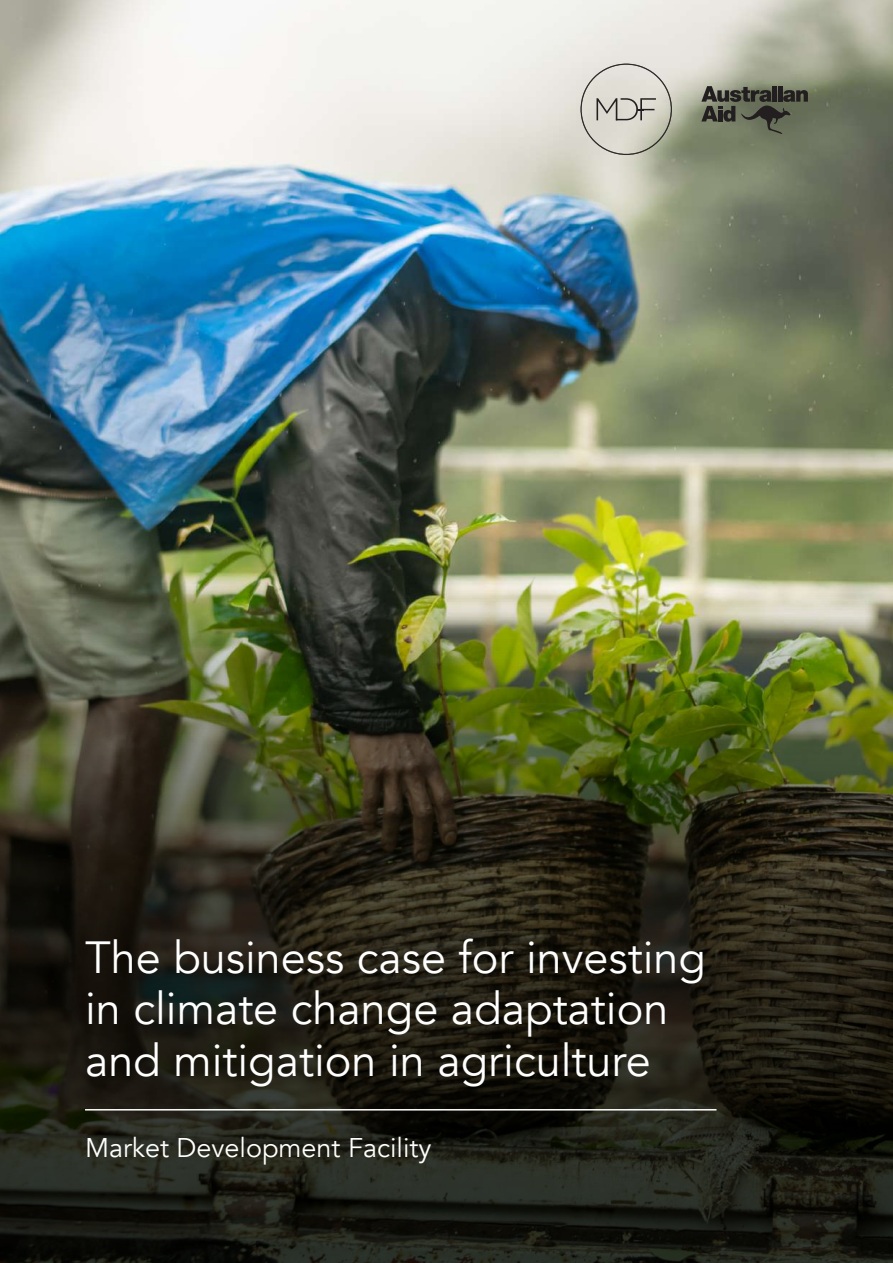
The Business Case for Investing in Climate Change Adaptation and Mitigation in Agriculture
This MDF case study examines how agricultural businesses can invest in climate change adaptation and mitigation while strengthening their commercial performance. Drawing on experience in Papua New Guinea, Timor-Leste, Sri Lanka and the Pacific, it explores business models that connect climate responses with better market access, productivity and incomes.
The paper describes risks affecting farms and supply chains, including changing rainfall, higher temperatures, pests and diseases, disrupted crop drying and transport, and evolving market standards. It argues that businesses need practical information about these risks before they can prioritise investments and assess the commercial benefits of responding.
Case studies cover low-carbon coffee certification and traceability in Papua New Guinea, coffee farm rehabilitation and improved drying in Timor-Leste, climate-resilient farming models in Sri Lanka, and access to agricultural inputs in the Pacific. The examples show how different locations, crops and market conditions shape the business case for action.
The lessons extend beyond individual farms to processing, logistics and supporting services. The report considers how development programmes can reduce investment barriers, demonstrate workable business models and help businesses support their farmer networks, while recognising the need for solutions suited to local circumstances.