Designing Interventions for Pro-poor Outcomes
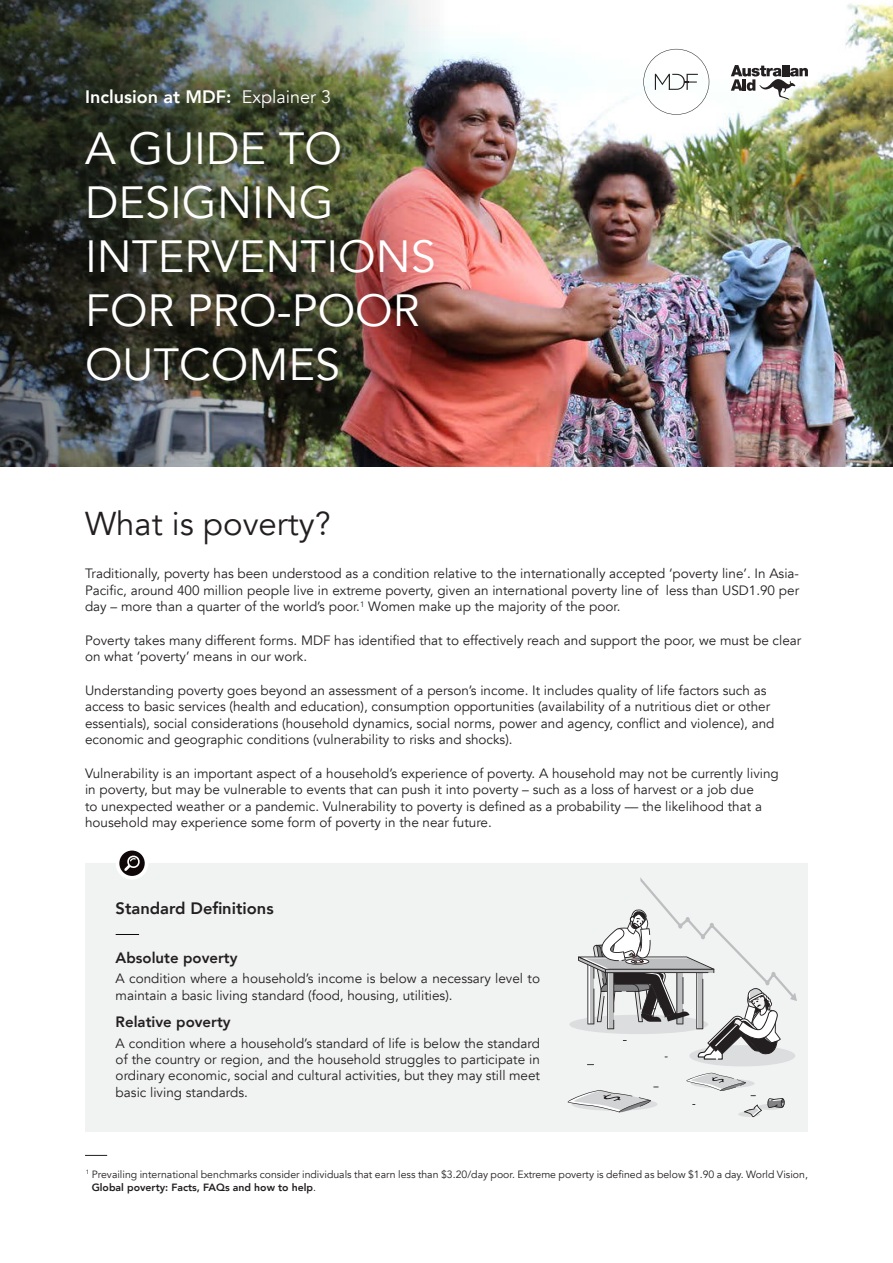
This explainer guides MDF teams in designing market systems interventions that benefit people living in poverty or at risk of falling into it. It explains that poverty involves more than income, including access to services, household dynamics, social conditions and exposure to economic or environmental shocks.
The paper sets out why reducing poverty and vulnerability is central to MDF’s approach. It encourages teams to understand the roles poorer people play as producers, employees and consumers, and to identify barriers that prevent them from participating in growth or receiving a fair share of its benefits.
Practical guidance covers sector selection, analysis, partnership design and measurement. Teams are asked to develop clear theories of change and business models that are commercially viable while creating benefits for poor households. The questions also consider women’s roles, possible risks, and the incentives and capabilities of partner businesses.
The monitoring section distinguishes access, use and benefits, helping teams assess whether changes are reaching the intended people and where adjustments are needed. Country examples provide further context on different experiences of poverty. The resource offers a structured approach to keeping pro-poor outcomes explicit throughout the intervention cycle.