Inclusion at MDF: Integrating Climate Resilience into Intervention Design
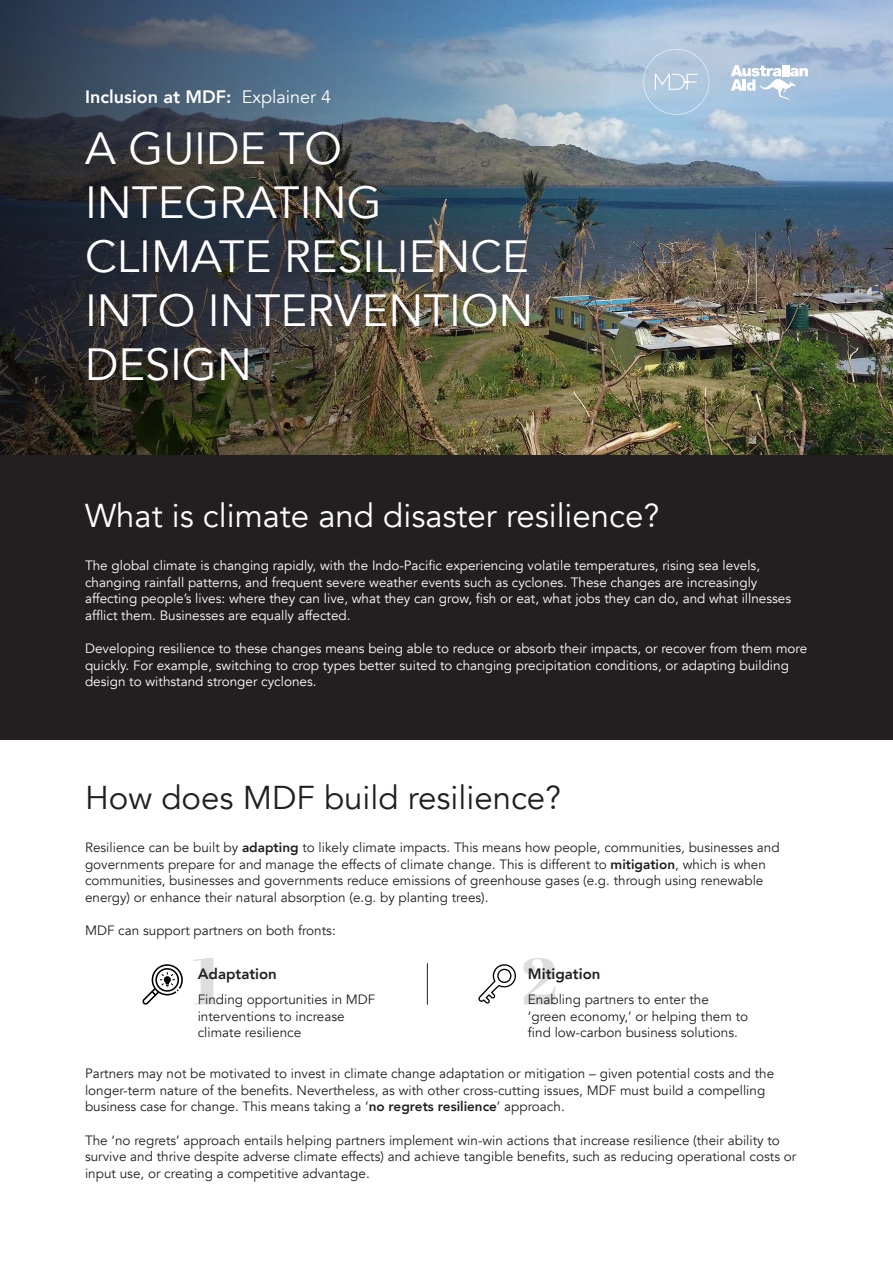
This explainer provides guidance on integrating climate resilience into MDF’s market systems interventions. It distinguishes adaptation to climate impacts from mitigation of greenhouse gas emissions, and explores how development partnerships can support businesses to respond in commercially practical ways.
The paper promotes a no-regrets approach: actions that improve resilience while offering tangible business benefits, such as lower operating costs, more reliable inputs or a competitive advantage. It considers risks across agriculture, fisheries, urban industries and tourism, including changing rainfall, rising temperatures, severe weather and threats to infrastructure.
Guidance follows the intervention cycle from analysis and strategy to partnership design, implementation and measurement. Teams are encouraged to identify the climate hazards affecting a business, assess its exposure and capacity to respond, and build a business case for feasible adaptation or mitigation measures. Examples include resilient farming practices, improved infrastructure and renewable energy.
The explainer also connects climate responses with inclusion priorities and the need to avoid unintended harm. A resource list points to advisory services, assessment tools and climate information. The document offers practical questions for programme teams developing interventions that can sustain benefits as climate conditions change.